
Why Slab Leaks Are So Common in Dallas-Fort Worth
Why Slab Leaks Are So Common in Dallas-Fort Worth
Dallas-Fort Worth has among the highest slab leak rates of any major metro in the United States. That’s not bad luck — it’s geology, construction history, and water chemistry combining into a perfect storm. If you own a home here, understanding why helps you spot trouble early and make smarter repair decisions. Here are the four forces working against your pipes.
Knowing why they happen helps you catch them early — memorize the 7 warning signs, and when in doubt, get a professional detection visit.
1. Blackland Prairie Clay: The Ground That Moves
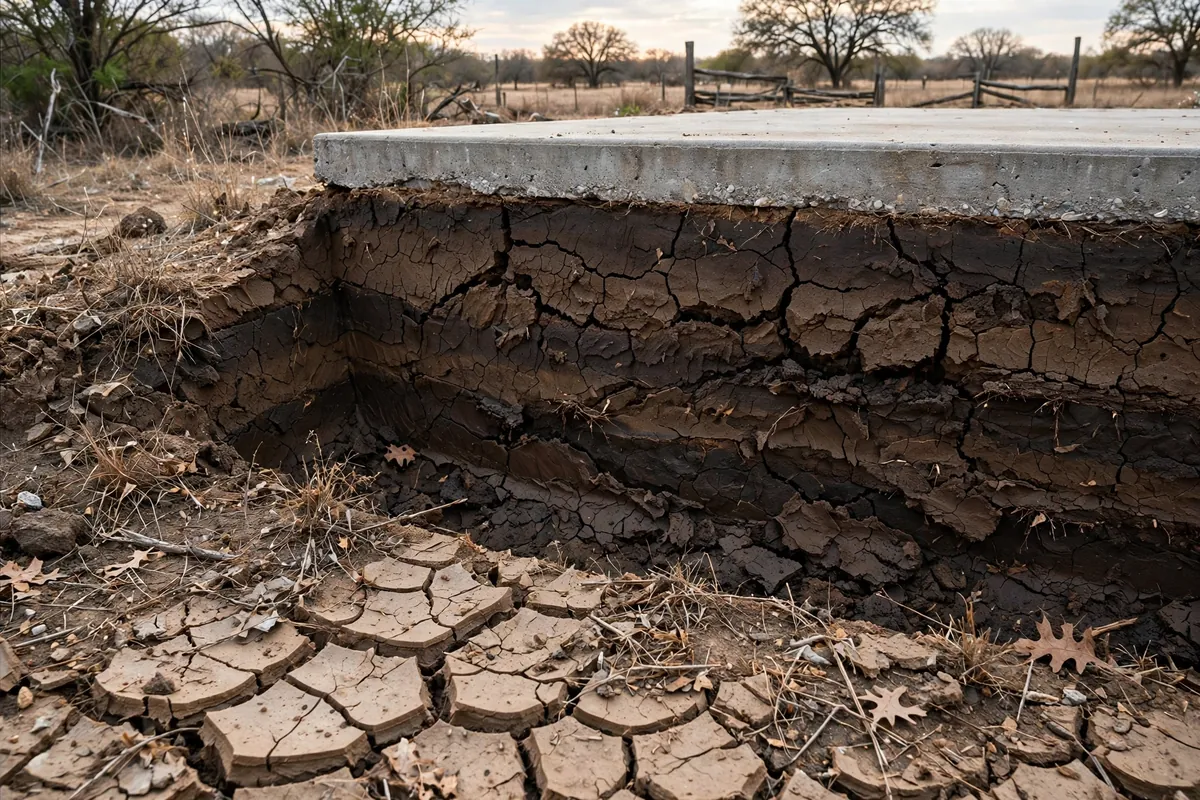
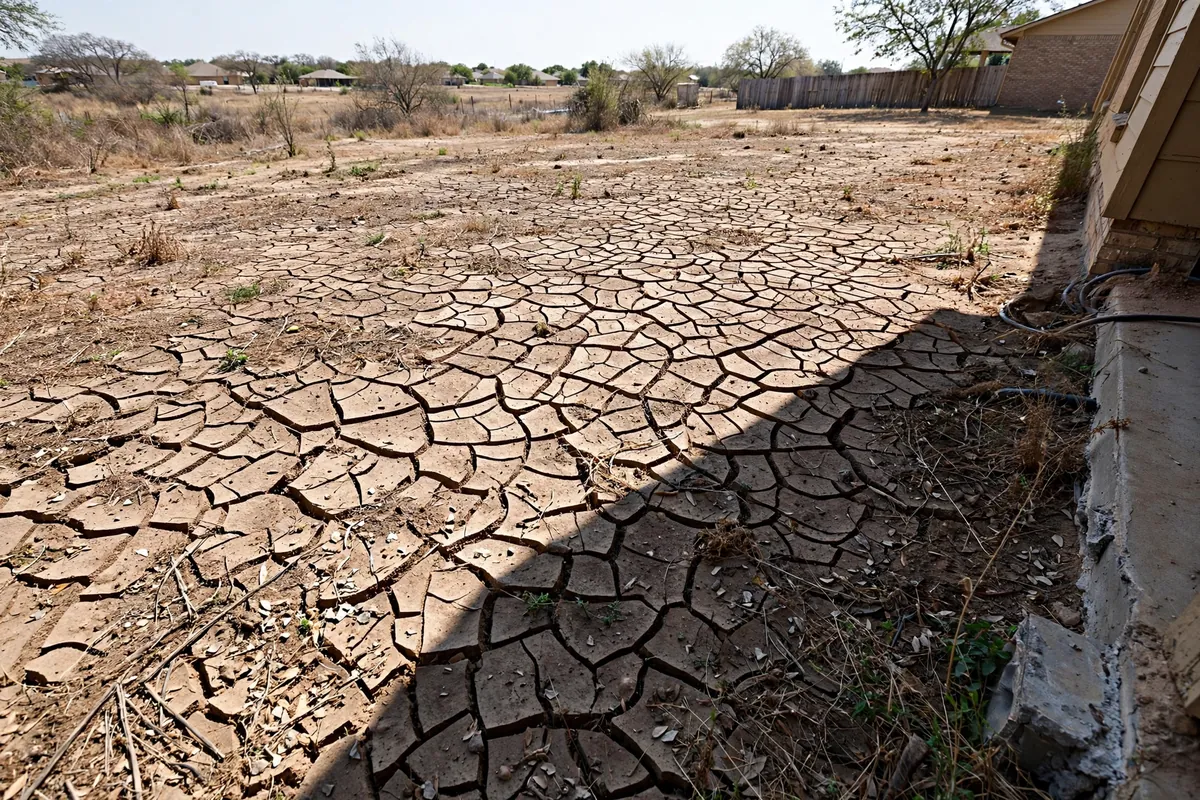
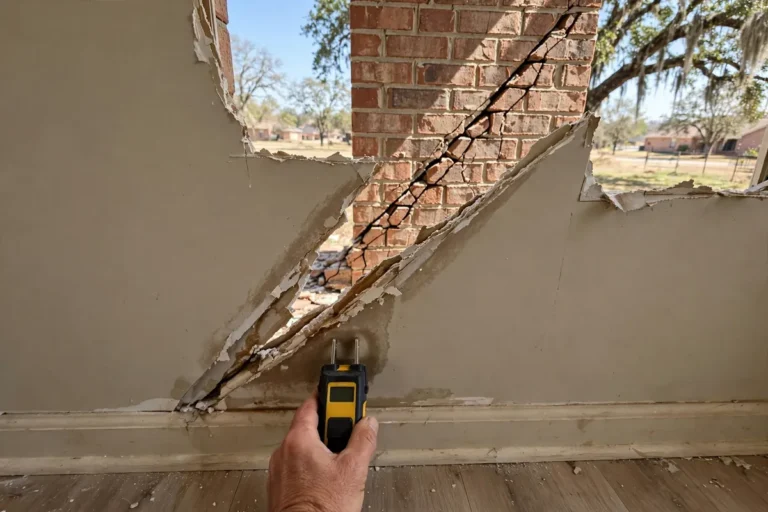
The soil under most of DFW is expansive clay — the famous Blackland Prairie gumbo. Dry, it shrinks and cracks. Wet, it swells up to 30 percent by volume, heaving upward with enough force to lift concrete. Across DFW’s wet-dry seasonal cycles, the ground under your slab moves inches every year — up in rainy springs, down in drought summers, back and forth, year after year.
Your copper water lines are embedded in or buried beneath that slab. Every soil cycle flexes the pipe — microscopically at first, then at joints and bends where stress concentrates. Copper is durable but not infinitely flexible; decades of seasonal flexing work-hardens the metal and eventually cracks it. This is the single biggest reason DFW leads the nation in slab leaks: the ground itself is slowly breaking the pipes. It’s also why a leak can masquerade as — or cause — foundation problems.
2. Slab-on-Grade: Nowhere for Pipes to Go
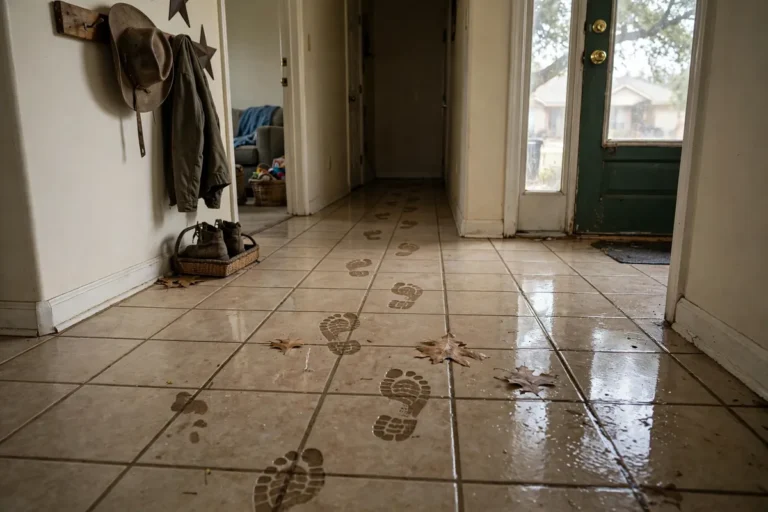
Nearly every DFW home is built slab-on-grade — no basement, no crawl space. Water lines run through or under the concrete slab, which means they’re inaccessible, uninspectable, and surrounded by that moving clay. In a basement home, a pinhole leak drips visibly and gets fixed in a day. In a DFW slab home, the same pinhole runs silently for months, saturating soil and eroding support, until the water bill or a warm floor gives it away. The construction method doesn’t cause leaks — but it guarantees every leak is hidden, and hidden leaks do the most damage. When one is confirmed, professional detection is the only way to find it without guesswork.
3. 1960s–80s Copper: An Entire Generation at Failure Age
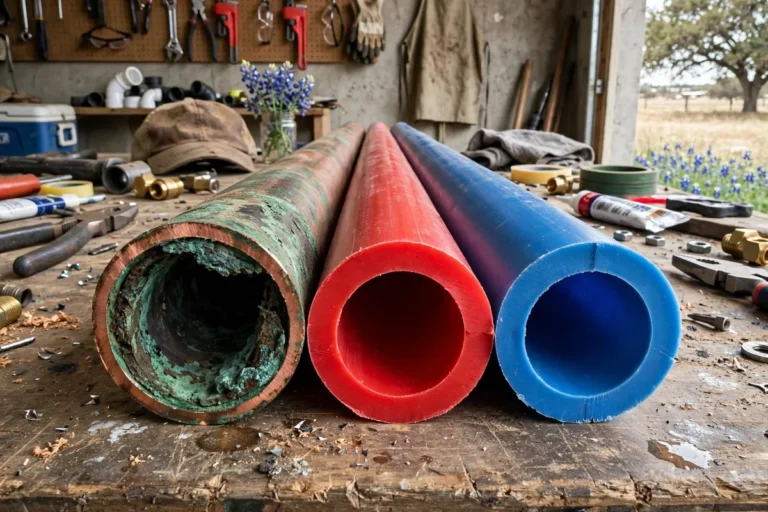
DFW’s explosive growth decades — the 60s, 70s, and 80s — filled entire suburbs (Garland, Irving, Arlington, Richardson, Mesquite, and huge swaths of Dallas and Fort Worth) with homes plumbed in copper. Copper water lines last roughly 40–60 years under good conditions. Do the math: that entire generation of pipe is now squarely in its failure window, all at once. Pinhole leaks from the inside out — corrosion pitting that starts as a microscopic weak point and opens under pressure — are the signature failure. This is why leak calls cluster in certain neighborhoods and certain decades of construction: it’s not the water, it’s the age. If your home was built between 1960 and 1990 and still runs original copper, you’re in the highest-risk cohort in the Metroplex.
Suspect a Leak? Get It Checked Before It Gets Worse.
Every day a leak runs, the damage — and the repair bill — keeps growing.
4. Hard Water: The Slow Corrosion Accelerator
DFW water is hard — and in some cities, extremely hard. Plano’s municipal water routinely measures 15–20 grains per gallon, among the hardest in Texas. Hard water doesn’t just leave spots on your shower door; dissolved minerals drive internal corrosion and scale buildup in copper lines, accelerating the pitting that becomes pinhole leaks. It’s a slower killer than soil movement, but it works 24/7 on every inch of pipe, and it compounds the other three forces. Homes with water softeners see measurably longer pipe life — one more reason controlling water pressure and water quality together is the cheapest pipe insurance you can buy.
The Compounding Effect: Why It’s Getting Worse, Not Better
Here’s what makes this urgent rather than academic: all four forces are peaking simultaneously. The clay hasn’t changed, but Texas drought-flood cycles have intensified the seasonal movement. The slab homes aren’t going anywhere. The 60s–80s copper is hitting failure age right now, this decade. And hard water keeps flowing. DFW isn’t experiencing a slab leak “trend” — it’s experiencing the predictable convergence of four independent causes. Leak specialists across the Metroplex report that calls keep climbing year over year, and the housing stock’s age profile says that continues for at least another decade.
What This Means for You as a Homeowner
- Know your risk tier. 1960–1990 home, original copper, slab foundation, no softener, high water pressure? You’re in the red zone. Learn the 7 signs of a slab leak cold.
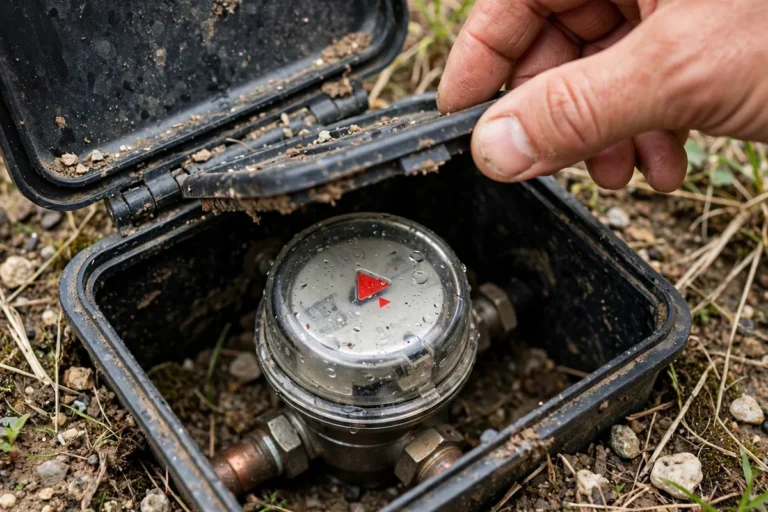
- Watch the water bill. It’s the earliest warning system you have. Our meter test walkthrough takes 30 minutes.
- Don’t patch a system — plan for it. One leak in 40-year-old copper is a preview. Budget for a reroute or repipe rather than serial spot repairs.
- Control what you can. A pressure reducing valve and a water softener are cheap compared to any leak repair, and they attack two of the four forces directly.
Frequently Asked Questions
Are slab leaks really more common in DFW than other Texas cities?
Yes. Houston has its own expansive clay issues, but DFW’s specific combination — Blackland Prairie clay with extreme shrink-swell, near-universal slab-on-grade construction, a huge 1960s–80s housing stock hitting pipe failure age simultaneously, and very hard municipal water — puts it among the highest slab leak rates of any US metro. Austin and San Antonio see the same forces to a lesser degree.
Do new homes in DFW get slab leaks too?
They can, but far less often. New construction typically uses PEX (flexible, corrosion-proof) rather than copper, and modern installations account for soil movement better. When new homes leak, it’s usually an installation defect — a kinked line, a nail strike, a bad fitting — not the systemic age-and-soil failure older homes face.
Can anything be done about the clay soil itself?
You can’t change the geology, but you can manage its effects: maintain consistent soil moisture around your foundation (soaker hoses in drought, drainage in deluge) to reduce the shrink-swell cycling. This helps foundations most, but steadier soil means steadier pipes too. It won’t save 50-year-old copper, though — nothing does except replacement.
Does a water softener actually prevent slab leaks?
It reduces one of the four causes — mineral-driven internal corrosion — which measurably extends copper pipe life. It does nothing for soil movement or pipe age. Think of it as removing one attacker from a four-front war: worthwhile, but not a cure for 40-year-old pipe in moving clay.
Which DFW neighborhoods are hit hardest?
Generally, suburbs built out in the 60s–80s with original copper: parts of Garland, Irving, Arlington, Richardson, Mesquite, and older Dallas and Fort Worth neighborhoods. But clay soil underlies most of the Metroplex, so no slab-on-grade home with aging copper is truly exempt. If you’re in Plano, Frisco, Allen, or McKinney, the hard-water factor runs especially high.
Live in DFW? Assume Your Pipes Are on a Clock
That’s not fear — it’s geology and arithmetic. The good news: a $300–$600 detection answers the question definitively, and modern repair options (reroute, repipe) end the cycle permanently. DFW Slab Leak Pros connects you with licensed local specialists for emergency slab leak detection in Dallas, 24/7 leak detection in Fort Worth, and every city across the Metroplex.
📞 Call (888) 555-0199 — lines open 24/7.
Water Where It Shouldn’t Be? Don’t Wait.
Every hour a leak runs, the damage — and the repair bill — keeps growing.
2 Comments