
Serving Arlington, Texas
Leak Detection in Arlington, TX
Arlington boomed in the 1970s and 1980s, and nearly everything built in that boom went up slab-on-grade — which makes Arlington the textbook DFW slab leak market. Those 1970s–80s subdivisions are now 40–55 years old, their original under-slab copper sitting in Blackland Prairie expansive clay that has spent four decades swelling, shrinking, and flexing every pipe it touches. Between Dallas and Fort Worth, Arlington gets the worst of both: aging copper like Dallas, aggressive clay like Fort Worth.
Arlington homeowners get our full slab leak detection service — and west in Tarrant County, see our Fort Worth leak detection page.
Arlington · mostly 1970s–80s copper · elevated slab-leak risk
DFW Slab Leak Pros connects Arlington homeowners with licensed local leak detection specialists who know these boom-era subdivisions cold — acoustic listening, thermal imaging, pressure testing, and honest reroute-vs.-repipe guidance.
Request Your Free Leak Assessment
Licensed DFW leak-detection specialists. Same-day appointments across Dallas-Fort Worth. Detection fee credited in full toward your repair.
Prefer to talk right now? (888) 555-0199 — 24/7 emergency line
Arlington’s 1970s–80s Boom Built the Slab Leak Capital
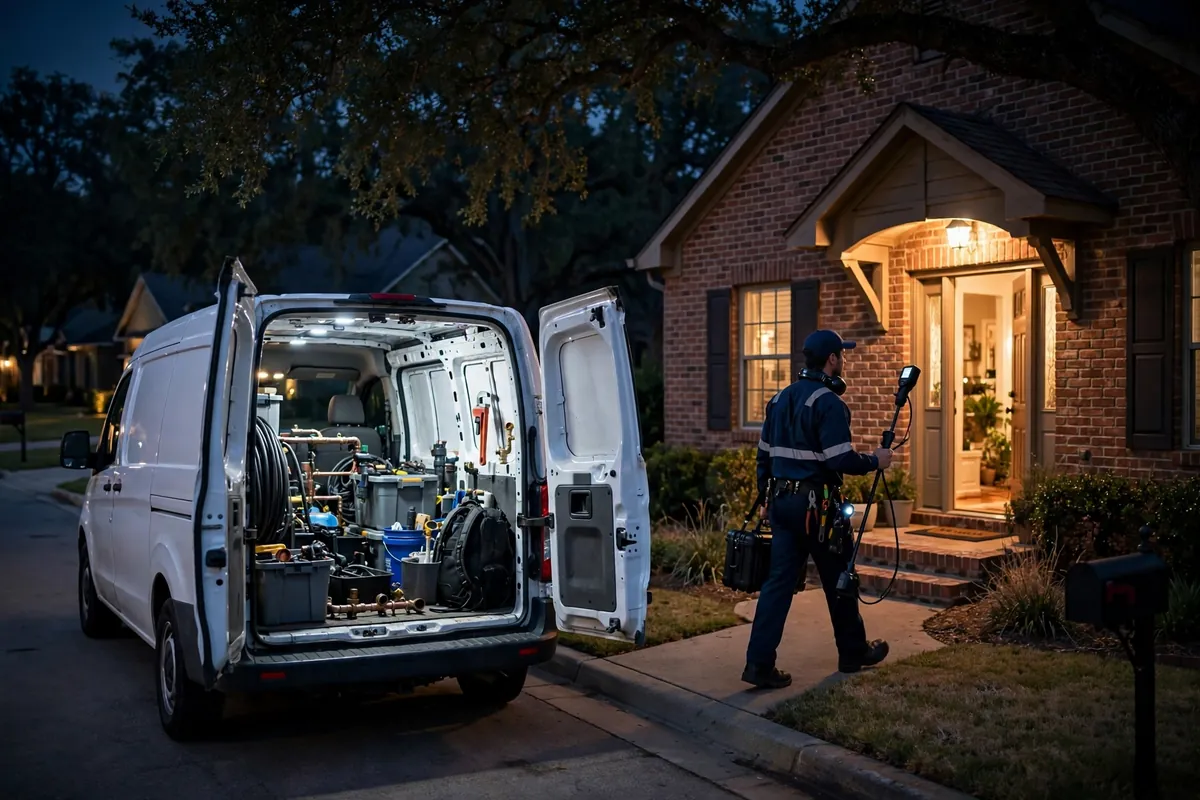
Arlington’s growth decades created a uniquely concentrated risk profile:
The pipes under Arlington homes
Mostly 1970s–80s under-slab copper — the textbook danger era. Thermal expansion abrades copper against concrete every hot-water cycle; forty-plus years of clay movement has flexed every joint. The oldest pockets still run galvanized supply lines, which corrode from the inside out. 1990s infill got better bedding and holds up longer. And because whole subdivisions went up the same year, they share the same pipe age — which is why Arlington sees wave failures street by street.
If your Arlington home is 1970s–80s with original plumbing, a slab leak isn’t a question of if — it’s a question of which line fails first and whether you catch it before it damages the foundation.
Signs Your Arlington Home Has a Slab Leak
- Water bill rising year over year. Pinhole leaks inflate the bill gradually — look at the trend, not one spike.
- Warm spots on tile or wood. A hot-water line leaking under the slab heats the flooring above.
- Running water sounds, everything off. Pressurized water escaping is audible in a quiet house.
- Cracks in walls or tile. Saturated clay heaves the slab; eroded clay lets it settle. Either way the house cracks.
- Sticking doors, buckling floors. Early slab-movement symptoms blamed on “settling.”
- Musty or mildew odors. Trapped water intrusion under the slab creates mold risk.
- The meter test. Shut off every fixture. Meter still moving? It’s under your slab.
Checking any of these boxes? Call (888) 555-0199 — we’ll connect you with a licensed Arlington leak detection specialist for same-day service.
How the Pros Find It — No Guesswork, No Jackhammer First
Specialists work non-destructively: acoustic listening detects the hiss of escaping water under the slab, thermal imaging maps warm and cool signatures through concrete, zone pressure testing proves which run is failing, and hydrostatic testing covers drain-side leaks.
Full detection in Arlington costs $300–$600, typically credited toward repair. On a 1970s–80s slab, that fee buys the one thing that matters: certainty about which line failed and whether the rest of the system is close behind.
Reroute vs. Repipe: Arlington’s Honest Math
A single-line reroute — abandon the failed under-slab copper, run new pipe through walls or attic — costs $3,000–$6,000. It’s the industry standard; in-slab patching of 45-year-old copper is not recommended.
But Arlington’s wave-failure pattern changes the calculation. When your 1978 subdivision’s copper is failing house by house, the first pinhole in your home is a preview. Homeowners who plan to stay frequently choose the full repipe ($12,000–$25,000) after the first leak rather than funding a reroute every year or two.
Catch It Before It Becomes a Foundation Problem
Arlington’s combination — 40-to-55-year-old copper, slab-on-grade everywhere, aggressive expansive clay — is exactly why DFW has one of the highest slab leak rates in the country. A $300–$600 detection today is what stands between a plumbing repair and a foundation repair. Bill climbing, warm floor spots, water coming up through the floor — call (888) 555-0199 now for same day leak detection in Arlington.
Also serving nearby: Leak Detection in Dallas, TX, Leak Detection in Fort Worth, TX, Leak Detection in Irving, TX, Leak Detection in Garland, TX, and Leak Detection in Richardson, TX. Related services: Slab Leak Detection, Emergency Leak Repair.
Frequently Asked Questions
Are slab leaks common in Arlington?
Yes — Arlington’s 1970s–80s under-slab copper is squarely in the failure window, sitting in expansive Blackland clay that swells up to 30% seasonally. Whole subdivisions share the same pipe age, so wave failures street by street are the norm here.
My water bill spiked but nothing is visibly leaking — slab leak or irrigation?
Shut the irrigation controller completely off and watch the meter. Still running? It’s the house system or service line — not the sprinklers. Warm floor spots, water sounds with everything off, or water coming up through the floor confirm a slab leak. A specialist proves it with acoustic listening and pressure testing.
How much does leak detection cost in Arlington?
Typically $300–$600 for the full diagnostic visit — acoustic listening, thermal imaging, and zone pressure testing — with most straightforward homes near the lower end. Most companies credit the fee toward repair.
Why does Arlington have so many slab leaks?
Arlington’s 1970s–80s boom built thousands of slab-on-grade homes with under-slab copper now 40–55 years old — squarely in the failure window. That aging copper sits in Blackland Prairie expansive clay that swells up to 30% and moves slabs seasonally. Old pipe plus aggressive soil is why DFW has one of the highest slab leak rates in the US.
My neighbor just had a slab leak — should I be worried?
Yes, take it seriously. Arlington subdivisions were built in waves, so neighboring homes share the same pipe age, material, and soil. Wave failures are common — when one 1978 home’s copper pinholes, the houses around it are on the same clock. A $300–$600 detection and system assessment now beats an emergency later.
Should I reroute or repipe my Arlington home?
One failed line: reroute it ($3k–$6k). But if your home has original 1970s–80s copper and this is the first of what the wave pattern suggests will be several failures, price the full repipe ($12k–$25k) against two or three future emergency reroutes. A licensed specialist will assess the whole system and lay out both options.
Can a slab leak damage my foundation in Arlington?
Absolutely. Leaking water saturates the expansive clay under your slab — which swells and heaves — or erodes soil away, letting the slab settle. Either way, a running plumbing leak becomes foundation movement. Fast detection is what keeps it a plumbing bill.
What should I do if water is coming up through my floor?
Shut off your main water valve immediately to stop the flow, then call (888) 555-0199 for emergency service. Water coming up through the floor means a pressurized line has failed under the slab — it needs a licensed specialist the same day, not next week.
Water Where It Shouldn’t Be? Don’t Wait.
Every hour a leak runs, the damage — and the repair bill — keeps growing.
When the Water Company Tips You Off in Arlington
Here is how most Arlington leak calls actually start: Arlington Water Utilities notices abnormal usage on your meter and sends a high-bill notice or leak alert — sometimes weeks before you see a damp spot or hear running water. Do not ignore it. A slab or supply-line leak can waste thousands of gallons a month, and in Arlington’s expansive clay soil, that water does foundation damage while it runs. Shut everything off and check your meter: if the dial moves with zero water use, call (888) 555-0199 for same-day leak detection in Arlington.