High Water Pressure and Pipe Leaks: Do You Need a Pressure Reducing Valve?
High Water Pressure and Pipe Leaks: Do You Need a Pressure Reducing Valve?
Here’s a cause of slab leaks almost nobody talks about: the water entering your home is pushing too hard. Municipal water systems deliver pressure that varies wildly by neighborhood, elevation, and time of day — and in parts of DFW it arrives at levels that quietly destroy plumbing from the inside. If your pressure is chronically above 80 PSI, every joint, valve, and aging copper line in your home is living under stress it wasn’t designed for. A pressure reducing valve (PRV) is the cheap fix. Here’s how to know if you need one.
High pressure often announces itself on the bill first — here is how to check for a leak when your water bill spikes, plus our whole-home leak detection if you need a pro.
What “Normal” Water Pressure Looks Like
Residential plumbing is designed for 40–80 PSI, with the sweet spot around 60–65 PSI. Below 40, showers feel weak and fixtures underperform. Above 80, you’re in the danger zone — and here’s the part most homeowners miss: pressure spikes at night. When neighborhood demand drops after midnight, municipal pressure can surge 10–20 PSI above daytime readings. A home that measures 75 PSI at noon might see 95 PSI at 3 AM, every night, for years. That cyclic hammering is what kills joints and pinholes aging copper.
How High Pressure Causes Leaks
It’s simple physics, and it’s relentless:
- Joint stress. Every soldered copper joint, every threaded connection, every fixture valve is rated for a pressure range. Chronic overpressure flexes and fatigues these joints — especially at elbows and tees — until they weep or burst.
- Pinhole acceleration. In aging copper already thinned by internal corrosion (remember DFW’s hard water), high pressure turns a microscopic weak point into a pinhole leak far sooner. Pressure doesn’t corrode pipe, but it exploits corrosion.
- Water hammer. High pressure makes the shock wave from closing valves (that bang when the washing machine shuts off) dramatically more violent. Repeated hammering cracks fittings and loosens joints over time.
- Appliance and fixture damage. Water heaters, ice makers, toilet fill valves, and washing machine hoses all fail sooner under chronic high pressure — and a burst washing machine hose at 90 PSI floods a laundry room in minutes.
In a DFW slab home with 1960s–80s copper already at failure age, high pressure is the accelerant on an already-lit fuse. It’s one of the key reasons slab leaks are so common here.
Signs Your Pressure Is Too High
- Banging or knocking pipes when valves close (water hammer)
- Faucets that spray or mist aggressively; toilets that run or fill valves that chatter
- Leaking T&P relief valve on the water heater (it’s venting excess pressure)
- Appliance hoses or supply lines failing “for no reason”
- Short water heater lifespan — high pressure kills them years early
- A previous pinhole leak with no other clear cause — review the 7 signs of a slab leak to see what else to watch for
Any two of these is enough to justify a $10 test.
The $10 Test: Check Your Pressure in 5 Minutes
Buy a water pressure gauge with a hose-bibb connection at any hardware store (about $10). Screw it onto an outdoor spigot or the water heater drain valve. Make sure no water is running anywhere in the house, then open the spigot fully and read the gauge. Do it twice: once midday, once late at night or early morning — the night reading catches the surge. If either reading exceeds 80 PSI, you need a PRV. If you’re consistently above 90, treat it as urgent: your plumbing is under damaging stress right now.
Suspect a Leak? Get It Checked Before It Gets Worse.
Every day a leak runs, the damage — and the repair bill — keeps growing.
What a PRV Does (and Costs)
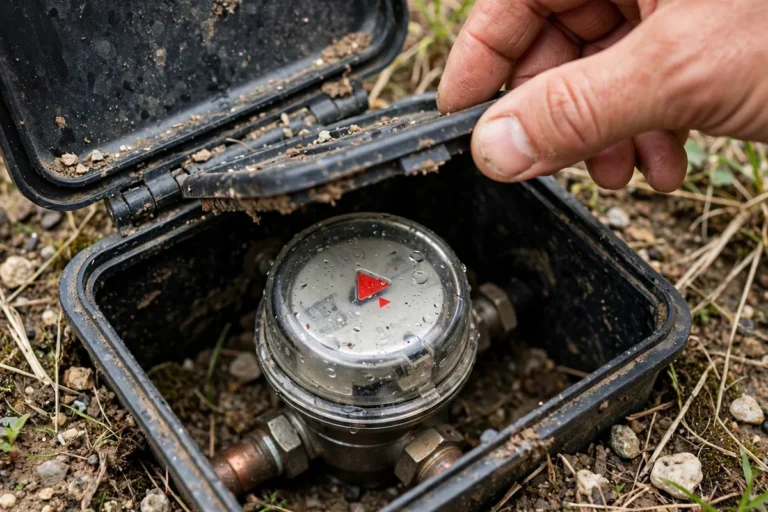
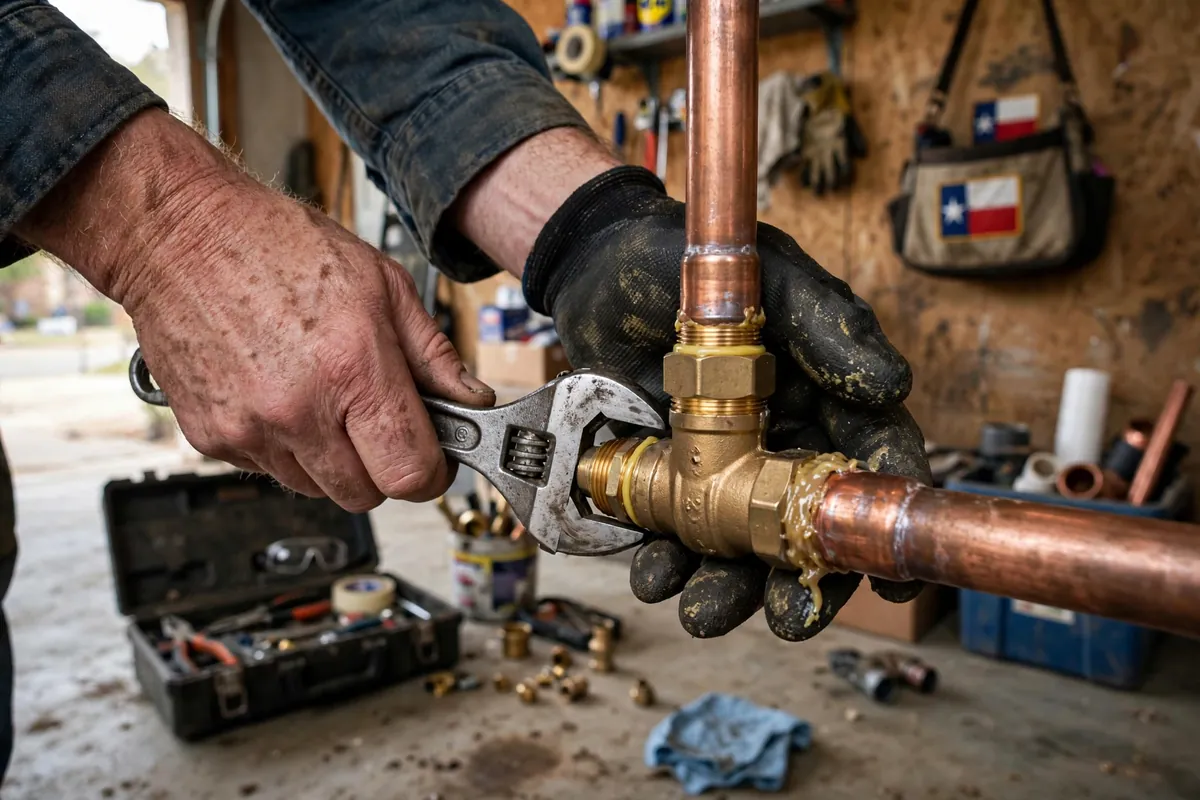
A pressure reducing valve installs on your main water line (usually right after the meter or where the line enters the house) and throttles incoming pressure down to a set level — typically 60–65 PSI. It’s a mechanical device with no power requirement and minimal maintenance: an occasional adjustment check every few years. Professionally installed in DFW, a PRV typically runs a few hundred dollars — the cheapest plumbing insurance you can buy, and a fraction of any single leak repair. If you’re already having a reroute or repipe done, adding a PRV at the same time is a no-brainer — the plumber is already working on your main lines.
Is Your Existing PRV Failing?
Many DFW homes already have a PRV — and many of those PRVs are 10–15 years old, which is their typical lifespan. A failed PRV usually fails open, meaning full municipal pressure flows straight through as if the valve weren’t there. You’d never know unless you test. Run the $10 gauge check: if your home has a PRV and you’re still reading over 80 PSI, the valve is done — replace it before the pressure does. Watch for the same symptoms as high pressure generally: returning water hammer, chattering fill valves, and fixtures failing “for no reason” years after the PRV was installed.
PRV + Thermal Expansion Tank: The Pair That Matters
One important detail: a PRV creates a “closed” system — pressure can’t push back out to the municipal main anymore. When your water heater heats water, it expands, and in a closed system that expansion has nowhere to go, spiking pressure inside your home. The fix is a thermal expansion tank on the water heater, which absorbs the surge. Any competent PRV installation includes one; if a quote doesn’t mention it, ask. This is standard, code-required work — not an upsell.
Frequently Asked Questions
Will lowering my pressure make my showers weak?
Not at 60–65 PSI — that’s the pressure most fixtures are designed around, and most people can’t tell the difference between 65 and 85 PSI in the shower. What you’ll notice is less splashing, less hammering, and quieter pipes. If your pressure is currently very high, the change feels like the plumbing “calmed down,” not like it got weak.
Can high pressure alone cause a slab leak?
Rarely alone — but it’s a powerful accelerant. In healthy new PEX, high pressure is mostly a fixture-and-appliance problem. In 40-year-old copper thinned by corrosion and flexed by clay soil, high pressure is often the final push that opens the pinhole. It turns “someday” into “this year.”
How long does a PRV last?
Typically 10–15 years. They can fail gradually (pressure creeps back up) or suddenly. That’s why the $10 gauge test is worth repeating every couple of years — five minutes to confirm your PRV is still doing its job.
My home already has a PRV. Could it have failed?
Yes — and failed PRVs are common in DFW’s older suburbs. If your PRV is 10+ years old and you’re seeing hammering, high readings, or fixture failures, test your pressure. A failed PRV often fails “open,” meaning full municipal pressure flows straight through as if the valve weren’t there.
Is a PRV required by code in Texas?
Most Texas plumbing codes require a PRV where incoming pressure exceeds 80 PSI — which describes a lot of DFW neighborhoods. Even where not strictly enforced on existing homes, it’s the recognized standard of care. New construction in high-pressure areas gets PRVs as a matter of course.
Ten Dollars, Five Minutes, Then Decide
You don’t need a plumber to find out if pressure is your problem — just a gauge and five minutes. But if the reading is high, or if you’re already dealing with a leak, don’t stop at the diagnosis. A professional detection visit can confirm whether high pressure has already opened a pinhole under your slab. DFW Slab Leak Pros connects you with licensed local specialists across Dallas, Fort Worth, Plano, Frisco, and the Metroplex for same day leak detection in Dallas, PRV installation, and full repair options — 24/7 leak detection in Fort Worth included.
📞 Call (888) 555-0199 — lines open 24/7.
Water Where It Shouldn’t Be? Don’t Wait.
Every hour a leak runs, the damage — and the repair bill — keeps growing.