
Dallas-Fort Worth Leak Detection Experts
Water Leak Detection in Dallas-Fort Worth, TX
Your water bill is climbing and nobody changed their habits. There is a damp spot on a wall that was not there last month. You can hear water moving somewhere, but every faucet is off. Somewhere in your DFW home, pressurized water is escaping — and the longer it hides, the more it costs you.
Think the leak is under your foundation specifically? Start with slab leak detection — and if water is actively coming up through the floor, go straight to emergency leak repair.
Not every leak is under the slab. Pinhole leaks in copper lines, hidden supply-line breaks inside walls, slow water intrusion behind tile — these are the leaks that do their damage quietly for months. DFW Slab Leak Pros connects homeowners across Dallas-Fort Worth with licensed local leak-detection specialists who find hidden water leaks of every kind. Call (888) 555-0199 — the visit that finds it costs $300–$600, and waiting costs far more.
Request Your Free Leak Assessment
Licensed DFW leak-detection specialists. Same-day appointments across Dallas-Fort Worth. Detection fee credited in full toward your repair.
Prefer to talk right now? (888) 555-0199 — 24/7 emergency line
The Hidden Water Leaks Eating DFW Homes
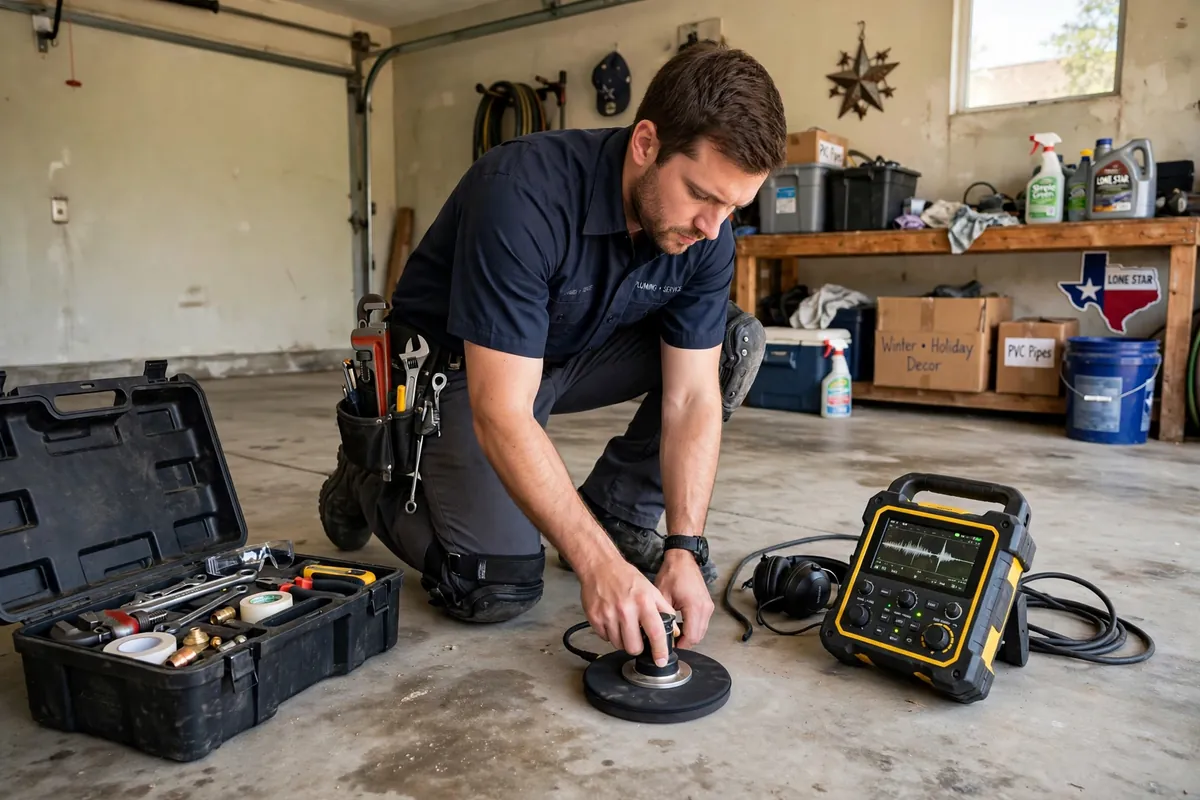
Go through these one by one. Each is a real failure mode our specialists see weekly across the metro — and each has a working solution that starts with detection, not demolition.
Pinhole leaks in copper supply lines. DFW water runs 15–20 grains per gallon in places like Plano — brutally hard water that corrodes copper from the inside out. The result is pinhole leaks: tiny perforations that spray a fine mist inside your walls or under your slab for months before anyone notices. One pinhole means the rest of that copper is on the same timeline.
Water intrusion behind walls and tile. A slow supply-line leak inside a wall cavity does not drip where you can see it. It soaks insulation, feeds mold inside the wall, and rots framing. The first visible sign is often a soft spot in drywall or paint bubbling — by which point the damage is extensive.
Under-slab copper breaks. The classic DFW failure: Blackland Prairie clay swells up to 30% with seasonal moisture, shifting inches under your foundation, while 40-to-60-year-old under-slab copper fatigues. If the leak is under the slab, see our slab leak detection page — the equipment and repair approach are specialized.
High-pressure line failures. Many DFW homes run municipal pressure well above safe levels with no working pressure reducing valve. A PRV set to 60–65 PSI protects every joint, valve, and fixture in the house. Without one, the whole system lives under stress and fails at its weakest point — usually at night, usually without warning.
How to Tell You Have a Hidden Leak
Hidden leaks announce themselves indirectly. Watch for these:
- The water bill test: usage jumps 20–30% or more with no change in habits. A hidden leak can waste thousands of gallons a month.
- The meter test: shut off every faucet, appliance, and irrigation zone. If the meter’s leak indicator dial moves, water is escaping somewhere in the system.
- Sound: hissing or rushing water inside walls or under floors when nothing is running.
- Warm or damp spots: on floors, walls, or ceilings — especially spots that never fully dry.
- Pressure drop: a shower that used to blast now trickles, because pressure is bleeding out through a break.
- Musty odors: constant moisture breeds mold inside wall cavities long before it becomes visible.
Two or more of these together is not a coincidence. It is a leak. Call (888) 555-0199 and get a specialist with real detection equipment to confirm it.
How Professional Water Leak Detection Works
A licensed DFW detection specialist does not guess and does not start cutting drywall. The process is methodical:
- System isolation and pressure testing — sections of the plumbing are shut down one at a time to determine exactly which branch holds the leak, and whether it is supply-side (pressurized) or drainage.
- Acoustic listening — sensitive microphones pick up the frequency of pressurized water escaping through a pinhole leak or cracked fitting, even through walls and concrete.
- Thermal imaging — an infrared camera reads temperature differences across walls, ceilings, and floors. Active leaks show as distinct thermal anomalies against dry surroundings.
- Moisture mapping — meters trace how far water intrusion has spread, so the repair plan covers the full damage zone, not just the break point.
The output of a proper visit: the leak’s location pinpointed, the moisture damage mapped, and a repair plan with honest pricing — usually within a single 1–2 hour appointment.
What Water Leak Detection and Repair Costs in DFW
- Detection visit: $300–$600, credited in full toward the repair when you hire the same specialist for the fix.
- Pinhole leak repair / single-line reroute: $2,500–$6,000 for under-slab lines rerouted through the attic and walls (the DFW standard: abandon and reroute, not in-slab repair).
- Full repipe: $4,500–$15,000 when aging copper is failing system-wide — common in 1960s–1980s DFW homes with original plumbing.
- Wall/ceiling leak repair: varies with access and damage, but far cheaper than the mold remediation and framing repair that follow months of delay.
Our guarantee: the detection fee is credited in full toward your repair. You get a written quote before any work starts — method, materials, warranty, license number. And no-dig options are quoted on every job, so you can compare the reroute price against any cut-and-repair quote side by side.
One more cost most homeowners miss: hot-side leaks spike your gas or electric bill too. A leaking hot line forces the water heater to run constantly replacing lost hot water — so you are paying three times: water bill, energy bill, and damage.
On insurance: the pipe repair itself is usually NOT covered — insurers classify failed pipe as wear and tear. But sudden resulting water damage often IS covered: soaked drywall, ruined flooring, damaged cabinets. Document everything with photos from day one, and do not let a leak run for months before calling — slow, ignored leaks are the claims that get denied. If water is actively flowing, skip the reading and go to our emergency leak repair page.
Why DFW Homes Leak More — and Why Waiting Multiplies the Bill
It is worth understanding why this keeps happening here. Expansive clay moves your foundation seasonally. Slab-on-grade construction puts every water line where you cannot see it. Hard water at 15–20 grains per gallon eats copper from the inside. High municipal pressure with no PRV stresses every joint. DFW has one of the highest leak rates in the country because most homes here get all four at once.
And every day a hidden leak runs, the job gets bigger. Water intrusion does not pause — it spreads through insulation, framing, and subflooring. Mold establishes in 24–48 hours. A $299 detection visit today is the difference between a contained repair and a remediation project. The EPA’s WaterSense program notes that household leaks waste nearly a trillion gallons nationally each year — your share of that is showing up on your water bill right now.
Call (888) 555-0199 today. DFW Slab Leak Pros connects you with licensed local specialists who find hidden leaks daily — pinpointed with professional equipment, priced honestly, with no pressure tactics. Businesses and property managers can also see commercial leak detection.
The EPA’s Fix a Leak Week resources show how much water a single household leak can waste every year — which is why finding even a “small” leak quickly matters.
Water Leak Detection
When Your Water Bill Is the First Warning
Most of our water-leak calls do not start with visible water — they start with a bill. “My water bill was $507 all of a sudden.” “It has slowly been creeping up for months.” Sometimes the water department contacts you first. A sudden spike or a steady climb with no change in your usage almost always means pressurized water is escaping somewhere: a supply line, a slab leak, an irrigation break, or a running toilet wasting hundreds of gallons a day. Do the meter test — everything off, watch the dial — and if it moves, call (888) 555-0199. Finding it early is the difference between a detection visit and a restoration project.
FAQs — Dallas-Fort Worth
How do I know if I have a hidden water leak?
The big three: a water bill that jumped with no habit change, a water meter that moves with everything shut off, and the sound of running water when nothing is on. Any two together means call for detection.
What is a pinhole leak, and why does DFW get so many?
A pinhole leak is a tiny corrosion perforation in copper pipe. DFW’s extremely hard water (15–20 grains per gallon in places like Plano) eats copper from the inside out, and high municipal pressure without a PRV accelerates it. One pinhole usually means more are coming.
How much does water leak detection cost?
$300–$600 for a standard residential visit — credited in full toward the repair with the same specialist. The visit usually takes 1–2 hours and ends with a pinpointed location and a repair plan.
Will you have to cut open my walls to find the leak?
No. Acoustic listening, thermal imaging, and moisture meters locate the leak through walls and floors first. Drywall is opened only at the confirmed repair point — never for exploration.
Is a hidden leak an emergency?
If water is actively flowing, yes — shut the main off and see our emergency leak repair page. A slow hidden leak is urgent but not midnight-urgent: schedule detection within days, not months, because mold and structural damage compound daily.
Will insurance cover the damage from a hidden leak?
The pipe repair itself is usually not covered (wear and tear), but sudden resulting water damage — soaked drywall, ruined flooring — often is. Photograph everything from the day you notice it. Leaks ignored for months are the claims that get denied.
Stop paying for water you never used. Call (888) 555-0199 now — DFW Slab Leak Pros connects you with a licensed local leak specialist for same-day detection across Dallas, Fort Worth, Richardson, and the full metro.
Water Where It Shouldn’t Be? Don’t Wait.
Every hour a leak runs, the damage — and the repair bill — keeps growing.