
Serving Dallas, Texas
Leak Detection in Dallas, TX
Dallas has the oldest housing stock in our service area — and that age shows up where you can’t see it: underneath your slab. Pre-1970 neighborhoods run on original supply lines never designed to last fifty-plus years, buried in Blackland Prairie clay that swells up to 30% and shifts inches every wet-dry cycle. Seeing the first signs? You need same day leak detection in Dallas from specialists who know this city’s plumbing history cold.
Dallas homeowners get our full slab leak detection service — and if you are closer to the mid-cities, see our Irving leak detection page.
Dallas · pre-1970 galvanized/cast iron + 1960s–80s copper · highest slab-leak risk in DFW
DFW Slab Leak Pros connects Dallas homeowners with licensed local leak detection specialists — the pros who find hidden leaks fast with acoustic listening and thermal imaging, before a small leak becomes a foundation repair.
Request Your Free Leak Assessment
Licensed DFW leak-detection specialists. Same-day appointments across Dallas-Fort Worth. Detection fee credited in full toward your repair.
Prefer to talk right now? (888) 555-0199 — 24/7 emergency line
Why Dallas Has the Highest Slab Leak Rate in DFW
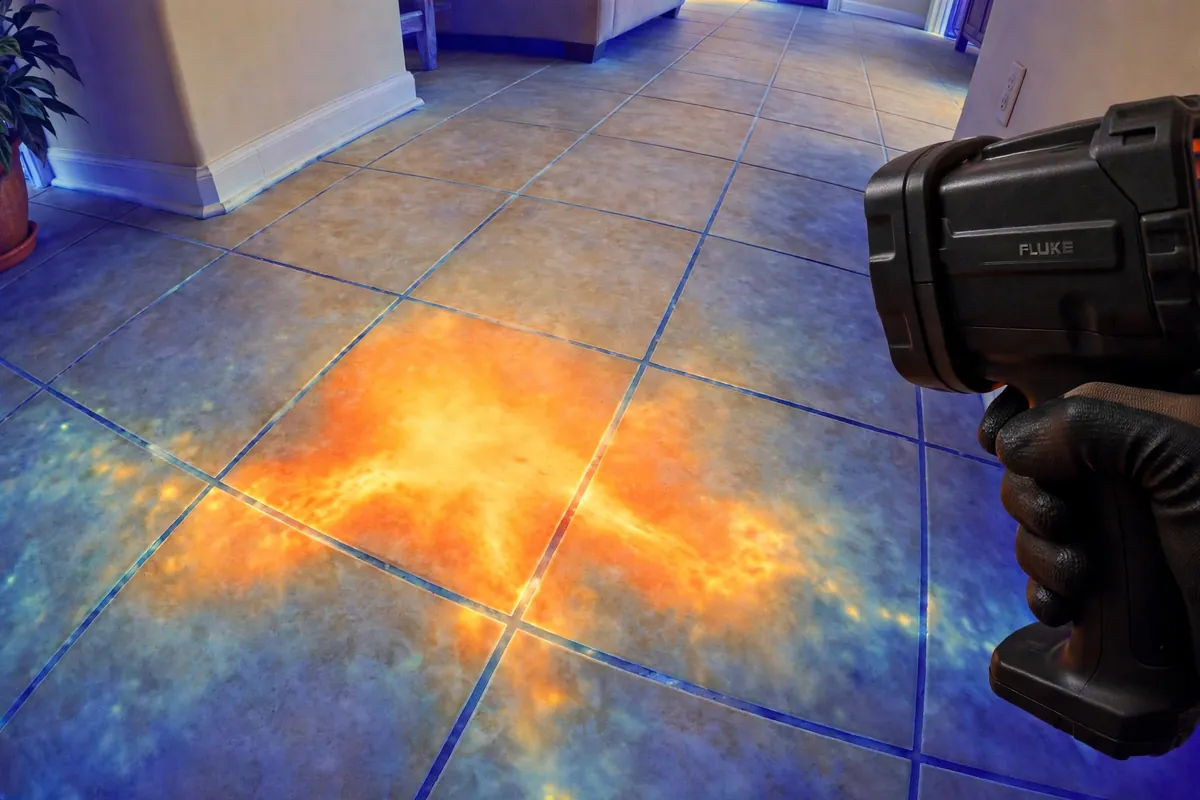
The Dallas-Fort Worth metro has one of the highest slab leak rates in the entire country, and Dallas proper sits at the center of it.
The pipes under Dallas homes
North Dallas’s pre-1970 stock still runs galvanized steel supply lines and cast iron drains — galvanized corrodes and scales from the inside until it pinholes; cast iron cracks as soil moves. The 1960s–80s under-slab copper across the rest of the city is the danger era: copper expands with hot water and abrades against concrete every thermal cycle, while shifting clay flexes every joint. 1990s infill copper got better bedding and fares better — but it’s aging in the same clay.
- Expansive Blackland Prairie clay. The clay under Dallas swells when wet and shrinks when dry, moving the slab — and the pipes inside it — inches per season, flexing joints and stressing connections until something gives.
- Slab-on-grade construction. When a pipe fails under a slab, there is no basement or crawlspace to catch the water. The first sign is often water coming up through the floor — a warm spot on the tile, a skyrocketing water bill, or water running when nothing is on.
A leaking under-slab line can erode soil for weeks before you notice — undermining the slab and inviting mold risk.
The Warning Signs Dallas Homeowners Miss
Slab leaks announce themselves, but the signals get ignored because they seem minor. Catch these early and detection costs a few hundred dollars. Miss them and you’re looking at foundation heave and a full reroute:
- Water bill climbing for no reason. Usage unchanged but the bill keeps rising? Water is going somewhere you can’t see.
- Warm or damp spots on floors. A hot-water line leak heats the concrete and tile above it — walk barefoot and you’ll feel it.
- Running water sounds. Hearing water with every faucet off is one of the most reliable slab leak indicators there is.
- Cracks in walls or flooring. Shifting soil shows up as cracks, sticking doors, and buckling tile.
- Mildew smell or visible mold. Persistent water intrusion under a slab creates mold risk fast.
- Meter won’t stop. Shut off every fixture; if the meter still spins, you have a leak.
If any of these are happening right now, don’t wait for it to get worse. Call (888) 555-0199 — we’ll connect you with a licensed leak detection specialist serving Dallas for same-day service.
How Professional Leak Detection Actually Works
Finding a leak under four inches of concrete is not guesswork. Licensed specialists work non-destructively: acoustic listening picks up the hiss of escaping water through the slab, thermal imaging reveals hot-line and cold-line temperature anomalies, pressure testing proves which run is losing pressure, and hydrostatic testing covers drain-side leaks.
Professional detection in Dallas typically runs $300–$600 — and reputable companies credit that fee toward the repair. That fee buys certainty: the exact leak location, the failed material, and a repair plan priced to the real problem.
What a Slab Leak Costs to Fix in Dallas
A spot reroute — abandoning the failed under-slab copper and running a new line through walls or the attic — typically runs $3,000–$6,000 per line. A full whole-home repipe lands around $12,000–$25,000. The industry standard is abandon-and-reroute, not chipping open the slab to patch the old pipe — in-slab repairs fail again because the surrounding pipe is the same age and condition.
In older Dallas homes with multiple original lines, a repipe is often the smarter move: fix one pinhole leak today, and the next section of the same 1960s copper fails six months later.
Water coming up through the floor? That’s not a slow leak — that’s a failure eroding soil under your slab. Shut off your main valve and call (888) 555-0199 now for emergency slab leak detection in Dallas.
Also serving nearby: Leak Detection in Richardson, TX, Leak Detection in Garland, TX, Leak Detection in Irving, TX, Leak Detection in Plano, TX, and Leak Detection in Arlington, TX. Related services: Emergency Leak Repair.
Frequently Asked Questions
Are slab leaks common in Dallas?
Yes — Dallas has the oldest housing stock in DFW and one of the highest slab leak rates in the country. Pre-1970 galvanized and cast iron in North Dallas plus 1960s–80s under-slab copper everywhere else, all sitting in expansive Blackland clay, means most neighborhoods are in or past the pipe-failure window.
My water bill spiked but nothing is visibly leaking — slab leak or irrigation?
Shut the irrigation controller completely off and watch the meter. If it still runs, the leak is in the house system or service line — not the sprinklers. Warm floor spots, water sounds with everything off, or water coming up through the floor confirm a slab leak. A specialist proves it with acoustic listening and pressure testing.
How much does leak detection cost in Dallas?
Typically $300–$600 for a full diagnostic visit — acoustic listening, thermal imaging, and pressure testing — with most straightforward homes landing near the lower end. Most reputable companies credit the detection fee toward your repair.
What are the signs of a slab leak in an older Dallas home?
The most common signs are an unexplained high water bill, warm spots on floors, the sound of running water when nothing is on, cracks in walls or flooring, mildew odors, and water coming up through the floor. In pre-1970 Dallas homes with original pipe, treat any one of these as urgent.
Do you offer same day leak detection in Dallas?
Yes. DFW Slab Leak Pros connects you with licensed specialists offering same day leak detection in Dallas, including emergency appointments when water is actively intruding. Call (888) 555-0199.
Will my homeowner’s insurance cover a slab leak?
Most Texas homeowner’s policies cover the water damage from a sudden slab leak — but typically not the pipe repair itself. Review your policy, and ask your specialist for documentation photos and reports, which help with claims.
Should I repair the pipe in the slab or reroute it?
The industry standard is abandon-and-reroute: leave the failed under-slab line in place and run a new line overhead or through walls ($3k–$6k per line). In-slab patching is rarely recommended — the adjacent pipe is the same age and will fail next.
Water Where It Shouldn’t Be? Don’t Wait.
Every hour a leak runs, the damage — and the repair bill — keeps growing.
When the Water Company Tips You Off in Dallas
Here is how most Dallas leak calls actually start: Dallas Water Utilities notices abnormal usage on your meter and sends a high-bill notice or leak alert — sometimes weeks before you see a damp spot or hear running water. Do not ignore it. A slab or supply-line leak can waste thousands of gallons a month, and in Dallas’s expansive clay soil, that water does foundation damage while it runs. Shut everything off and check your meter: if the dial moves with zero water use, call (888) 555-0199 for same-day leak detection in Dallas.