
How Professional Leak Detection Works: Acoustic, Thermal & Camera Tools
How Professional Leak Detection Works: Acoustic, Thermal & Camera Tools
It’s 2 AM. Water is coming up through your floor, or your meter is spinning, or you just heard that hissing under the hallway. You call, and a specialist shows up with a van full of equipment. What happens next? No jackhammers. No guesswork. No tearing up half your house “to take a look.” This is exactly how professional slab leak detection works in Dallas-Fort Worth — the same process, whether it’s 2 PM or 2 AM.
Understanding the method helps you hire right — see what our DFW slab leak detection service includes, and compare repair options once the leak is found.
Step 1: Confirm the Leak (The Meter Test, Done Right)
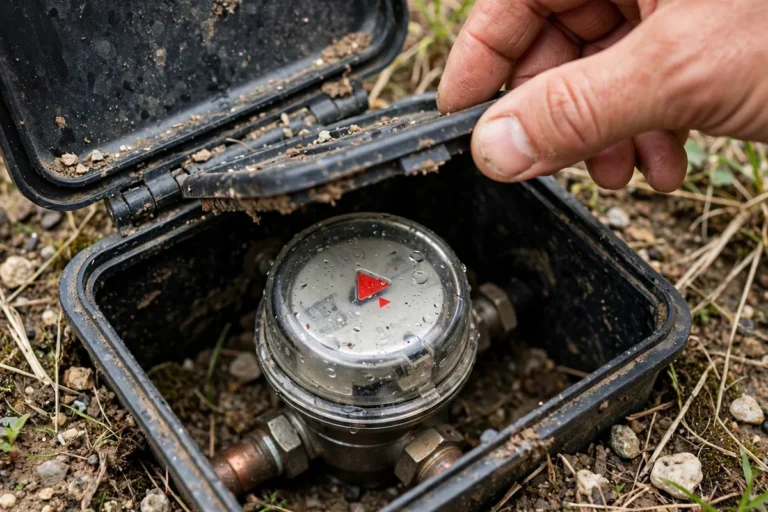
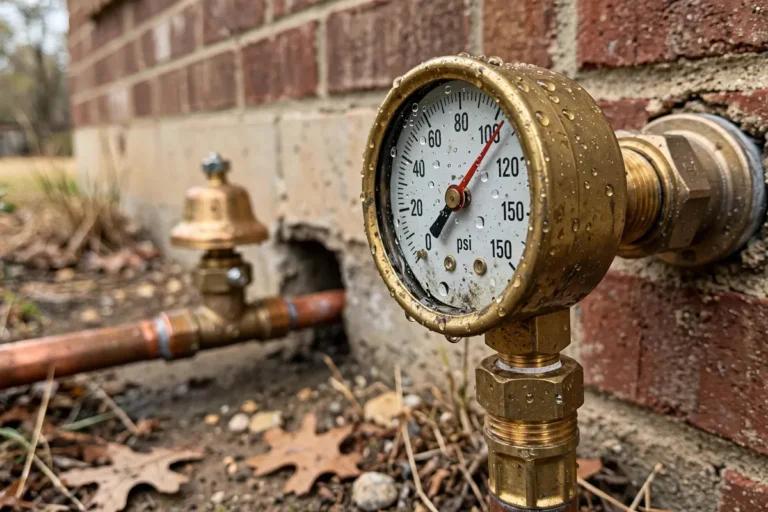
Every detection visit starts the same way: the specialist verifies water is actually leaving your system. Main valve behavior, meter movement with fixtures off, pressure readings on the lines. This takes minutes and rules out false alarms — a running toilet, a stuck irrigation valve, a water heater issue. If there’s no leak, you find out now, before anyone touches your slab. If there is, the hunt begins — and the specialist already knows whether it’s on the hot side or cold side from pressure and temperature behavior, which narrows the search enormously.
Step 2: Acoustic Listening — Hearing the Leak Through Concrete
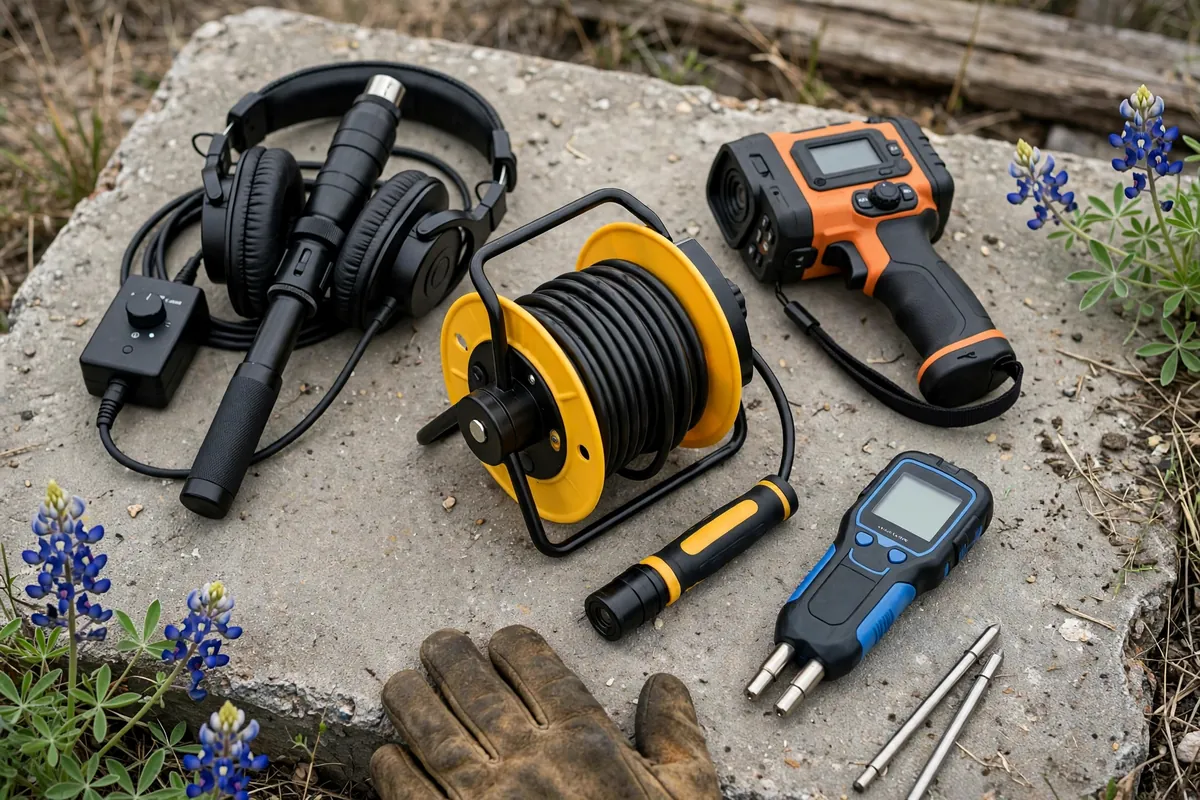
Pressurized water escaping through a pinhole or crack makes noise — a distinct hissing or whooshing that travels through the pipe and the surrounding soil. Acoustic listening equipment (electronic ground microphones and pipe-contact sensors) amplifies that sound so precisely that a trained technician can trace a pipe’s path under the slab and hear exactly where the noise peaks. The loudest point is the leak, typically with precision. This is the workhorse of emergency slab leak detection in Dallas: fast, non-invasive, and devastatingly accurate in experienced hands. It works best on pressurized supply lines — which is exactly what slab leaks are.
Step 3: Thermal Imaging — Seeing Heat You Can’t Feel
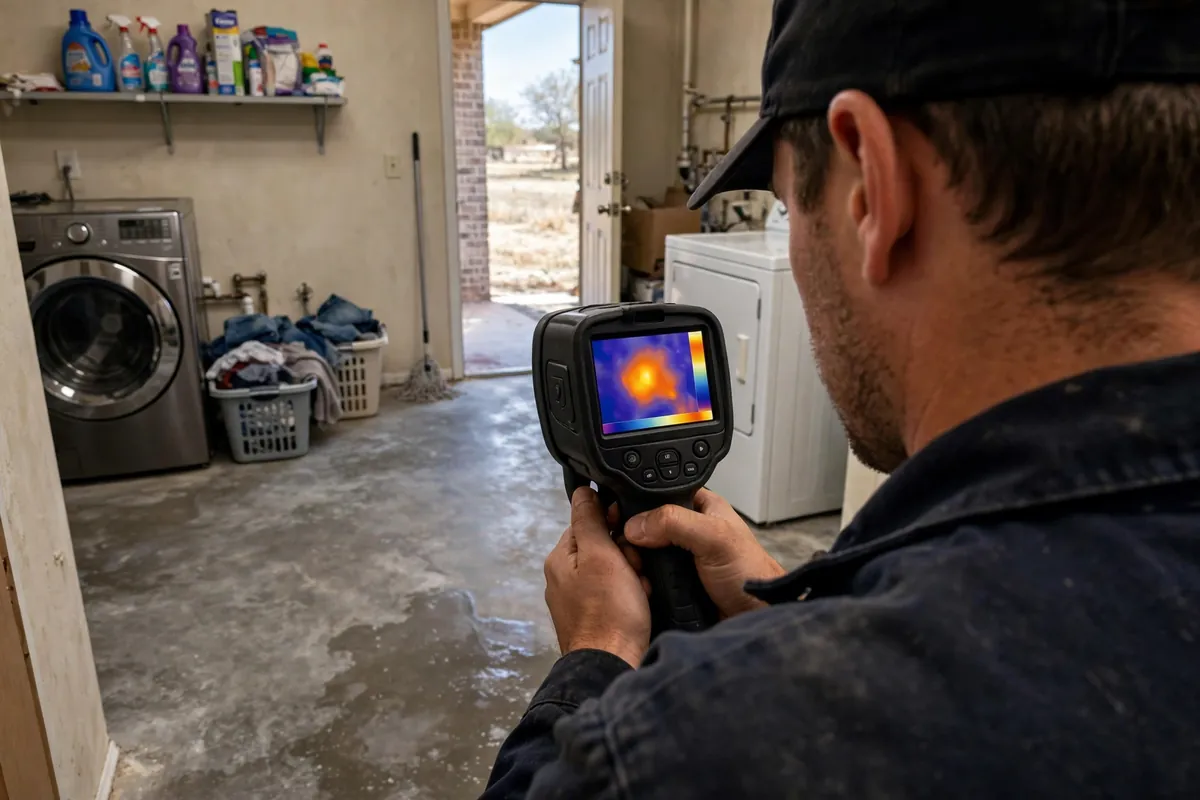
For hot-water line leaks, thermal imaging cameras detect the heat signature of escaping hot water warming the slab and flooring above it. On the camera’s display, the leak shows up as a bright bloom against the cooler surrounding concrete. Even for cold lines, thermal imaging reveals the cool signature of saturated soil versus dry soil. Combined with acoustic data, thermal imaging cross-confirms the location — two independent tools pointing at the same square foot of floor. That’s the standard of proof before anyone picks up a saw.
Suspect a Leak? Get It Checked Before It Gets Worse.
Every day a leak runs, the damage — and the repair bill — keeps growing.
Step 4: Camera Inspection — Looking Inside the Pipes
For drain and sewer-side leaks (as opposed to pressurized supply lines), specialists run waterproof camera heads through the lines. The camera shows cracks, separations, root intrusion, and bellies in real time, with a locator sonde that lets the technician mark the exact spot on the floor above. Camera work is also how specialists verify the condition of the rest of the line — one pinhole in otherwise sound pipe is a different conversation than a line that’s failing in five places, and that distinction drives the repair recommendation. Our sewer line leak detection service uses this same camera-first approach.
Step 5: Moisture Mapping and Line Tracing
Supporting tools fill in the picture: pin and pinless moisture meters map how far water intrusion has spread through flooring and drywall (critical for the insurance documentation and the mold-risk assessment). Electronic line locators trace the pipe’s exact path under the slab so the repair plan avoids surprises. Tracer gas — a harmless hydrogen-nitrogen mix injected into an isolated line — can pinpoint leaks that are too quiet for acoustic equipment, detected by a sniffer at the surface. Not every job needs every tool; a good specialist uses the minimum set that gives a confident answer.
What Happens When We Arrive at 2 AM
The after-hours process is the same process, just faster on the phone. When you call (888) 555-0199 at 2 AM, here’s the sequence:
- Two-minute triage: what’s happening, where, and have you shut off the main valve? (If not, we’ll walk you through it on the phone.)
- Dispatch: a licensed local specialist is routed to you — after hours leak detection is a core service, not an exception, across Dallas, Fort Worth, Plano, Frisco, and surrounding cities.
- On-site confirmation: meter test and pressure check first, so you know within minutes whether this is a real leak.
- Pinpoint detection: acoustic + thermal (+ camera if it’s drain-side) until the location is marked on your floor — usually within the hour.
- Straight answers: here’s where it is, here’s what it will take to fix it (spot repair, reroute, or repipe), and here’s the itemized price. The $300–$600 detection fee is typically credited toward the repair.
No one starts breaking concrete at 2 AM on a guess. Detection first, decisions second, demolition only with your approval and a precise target.
What Detection Is NOT
- Not a free estimate visit. Detection is a skilled diagnostic service with specialized equipment — that’s what the $300–$600 covers. Beware anyone who “detects” for free; they’re usually selling a repair, not a diagnosis.
- Not destructive. If a company wants to start opening your slab before they’ve pinpointed the leak with instruments, stop them. That’s not detection, that’s demolition with hope.
- Not a repair quote by itself. Detection tells you where and what; the repair plan and price follow from it. The two should be presented separately and clearly.
Professional detection follows industry standards — the IICRC sets the certification benchmarks that reputable leak detection and restoration specialists train to.
Frequently Asked Questions
How accurate is professional leak detection?
Very. A trained specialist using acoustic listening cross-confirmed with thermal imaging routinely pinpoints supply-line leaks with precision — close enough to open a single 2×2-foot section of slab, or to plan a precise reroute. It’s not perfect on every soil type and pipe material, which is why professionals use multiple tools rather than relying on one.
How long does detection take?
Most residential detections take 1–2 hours on site. Complex cases — multiple leaks, very quiet pinholes, unusual pipe routing — can take longer. Emergency calls at night follow the same process; there’s no shortcut version.
Will detection damage my floors or walls?
No. Acoustic listening, thermal imaging, cameras, and moisture meters are all non-invasive — nothing is opened, drilled, or cut during detection. The only marks left behind are typically tape or chalk marking the leak location on the floor.
Do I really need all this equipment, or can a plumber just listen for it?
An experienced ear can suspect a leak, but “suspect” isn’t good enough to cut concrete or reroute plumbing. The equipment exists to turn suspicion into a marked location you can stand on. Given that the repair decision (and thousands of dollars) rides on the location being right, instrument-confirmed detection is the only responsible approach.
What if detection finds more than one leak?
It happens, especially in homes with 1960s–80s copper at failure age. The specialist will show you each location and explain whether spot fixes make sense or whether a reroute or whole-house repipe is the honest recommendation. Multiple leaks are usually the moment a repipe conversation starts.
Know Exactly Where It Is Before Anyone Touches Your Slab
Detection is the cheapest, fastest, most important part of the whole job — and it’s the part that protects you from every bad outcome: wrong-location demolition, unnecessary repairs, and paying for work twice. DFW Slab Leak Pros connects you with licensed local specialists for same day leak detection in Dallas, 24/7 leak detection in Fort Worth, and general water leak detection across the entire Metroplex.
📞 Call (888) 555-0199 — detection $300–$600, credited toward your repair.
Water Where It Shouldn’t Be? Don’t Wait.
Every hour a leak runs, the damage — and the repair bill — keeps growing.

2 Comments