

Your Water Bill Suddenly Spiked? How to Check for a Leak Before You Call
How to Check for a Slab Leak Yourself: The 10-Minute Water Meter Test
Your water bill spiked, or you heard something under the floor, or a warm spot showed up on the tile — and now you’re wondering if you have a slab leak. Before you call anyone, run this protocol. It takes ten minutes, costs nothing, and it’s the same first test licensed leak specialists run on every call. Nobody else has published the complete version — most guides stop at “check your meter.” This one goes further: shutoff, leak-indicator triangle, hot-vs-cold isolation, floor check, and bill reading. Do all five steps and you’ll know whether you have a leak, which side it’s on, and exactly what to say when you call.
A spiking bill is often the first symptom — cross-check against the 7 signs you have a slab leak, and learn why DFW homes are especially prone to them.
The 10-Minute Slab Leak Self-Check Protocol
What you need: access to your water meter (usually at the curb in a concrete or plastic box — lift the lid with a screwdriver), and ten minutes when nobody needs water.
Step 1 — Shut everything off (2 minutes)
Turn off every faucet, shower, toilet (no flushing during the test), dishwasher, washing machine, ice maker, and humidifier. Tell everyone in the house: no water for the next ten minutes. This is the foundation of the whole test — any water use invalidates it.
Step 2 — Watch the leak-indicator triangle (3 minutes)
Open the meter box and look at the dial face. Most DFW water meters have a small triangle or star-shaped leak indicator — it spins with even tiny flows. With everything off, watch it for two to three minutes. If it’s moving at all, water is leaving your system through a break. No movement? Note the exact reading (or photograph it — the photo is timestamped evidence), wait the full ten minutes, and read again. Any change in the numbers confirms a leak, even a slow one.
Step 3 — Hot vs. cold isolation (2 minutes)
Here’s the step nobody publishes. Go to your water heater and close the cold-water inlet valve on top of it (usually a lever or gate valve on the pipe going into the heater). Now check the meter triangle again. If the triangle stops spinning, the leak is on the hot-water side — you’ve just told the specialist exactly which line to trace, which cuts detection time. If it keeps spinning, the leak is on the cold side. Open the inlet valve again when done.
Step 4 — Feel the floors (2 minutes)
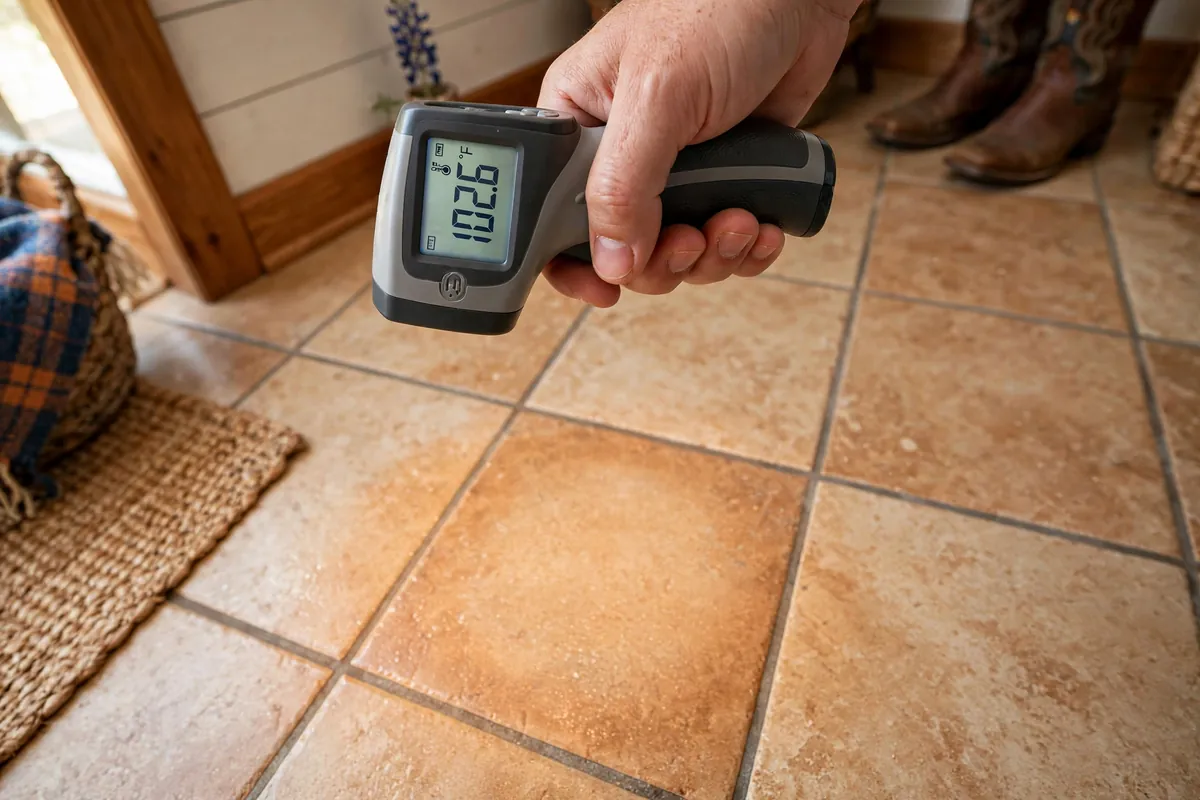
Walk barefoot across tile, hardwood, or laminate — especially hallways and areas near bathrooms and the kitchen. A warm spot confirms a hot-side leak (Step 3 told you which side; now you know roughly where). A damp or cool spot, dark grout lines that never dry, or cupping wood planks point to a cold-side leak wicking moisture upward. Note every location — this is the map you hand the specialist.
Step 5 — Read the bill (1 minute)
Pull up your last two water bills and compare gallons used (or CCF), not dollars — rates change; volume doesn’t lie. A 30%+ jump with no behavior change corroborates everything above. Divide the extra gallons by 30: a pinhole slab leak typically wastes 200–400 gallons a day, which is 6,000–12,000 gallons a month you’ll keep paying for until it’s fixed.
Triangle spinning? You have a confirmed leak. Shut off your main valve to stop the damage, and call (888) 555-0199 now — say “my meter’s leak indicator is spinning with everything off” and whether it’s hot or cold side. That sentence gets you prioritized for same day leak detection in Dallas or 24/7 leak detection in Fort Worth.
Suspect a Leak? Get It Checked Before It Gets Worse.
Every day a leak runs, the damage — and the repair bill — keeps growing.
First: Rule Out the Innocent Explanations
Before you run the protocol, eliminate the usual suspects so a positive test means what you think it means:
- Toilet flappers. A worn flapper silently wastes 200+ gallons a day. Put food coloring in the tank; color in the bowl within 15 minutes (no flush) means a bad flapper, not a slab leak.
- Irrigation. In DFW summers, sprinklers can double a bill. Run each zone and walk it — geysers, sunken heads, or permanently soggy patches mean a broken lateral line, not a slab leak. Key test: with the irrigation controller fully off for 24 hours, run the meter protocol. Still spinning = slab.
- Hose bibbs, pool auto-fill, water heater T&P valve. Check outdoor spigots, the pool filler, and the water heater’s discharge pipe outside — all can drain silently.
What the Self-Check Can’t Tell You
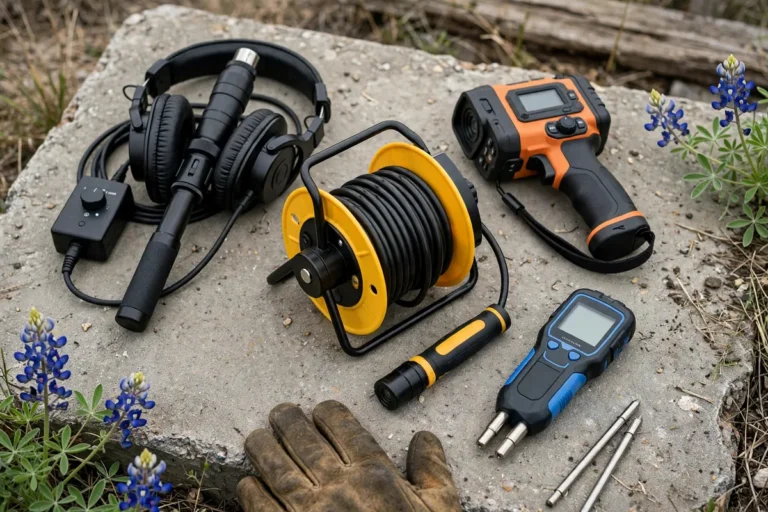
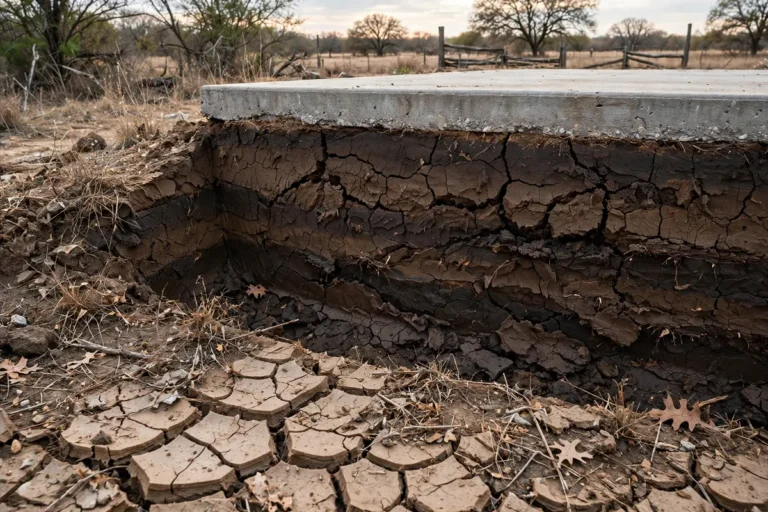
This protocol confirms that you have a leak and which side — not the precise location. Pinpointing takes acoustic listening, thermal imaging, and camera inspection: equipment and training, not guesswork. Don’t break concrete or dig based on where the floor felt warm — warmth spreads through a slab and misleads. And don’t ignore a positive test: a confirmed leak erodes soil, risks foundation movement, and feeds mold from day one. Review the 7 signs of a slab leak to see what else to watch while you wait for your appointment.
If your bill jumped, you are not alone — the EPA estimates that household leaks waste nearly a trillion gallons of water nationally each year, much of it from leaks just like this.
Frequently Asked Questions
My meter has no triangle — just numbers. Can I still do this test?
Yes. Record the exact reading, photograph it, wait 30–60 minutes with zero water use, and read again. Any movement in the numbers means a leak. The triangle just makes small leaks visible faster — without it, a longer wait catches the same thing.
The triangle spins, then stops, then spins again. What does that mean?
Intermittent flow — usually a toilet flapper that seals sometimes, a sprinkler valve sticking occasionally, or an ice maker cycling. Run the food-coloring toilet test and shut off the irrigation controller, then repeat the protocol. If the triangle spins steadily with those eliminated, it’s a continuous leak — likely a slab leak.
How do I know if it’s a slab leak versus an irrigation leak?
The isolation test: turn your irrigation controller completely off (not just the schedule — the controller itself) for 24 hours, then run the meter protocol. Triangle still spinning with irrigation dead = the leak is in the house plumbing, and in a DFW slab home that means under the slab. Spinning stops = it’s in the irrigation system.
The hot-side isolation stopped the triangle. What now?
You’ve confirmed a hot-water line leak — tell the specialist exactly that when you call. Hot-side leaks also spike your gas or electric bill (the water heater runs constantly), so check that bill too. Don’t leave the heater inlet closed indefinitely; reopen it and shut off the main valve instead until help arrives.
Is it safe to keep using water after a positive test?
Minimize it. Every gallon through a broken line feeds the damage under your slab. If you must use water until the specialist arrives, shut the main off between uses — especially overnight. And turn off the water heater (breaker or gas to pilot) so it doesn’t burn out on an empty tank.
Test Positive? Don’t Wait — Call.
This protocol is the limit of safe self-help, and you’ve just run it. Everything after this — locating the leak, exposing it, repairing it — requires licensed professionals. DFW Slab Leak Pros connects you with licensed local specialists across the Metroplex for emergency slab leak detection in Dallas and after hours leak detection anywhere in DFW. Detection runs $300–$600 and the fee is typically credited toward your repair.
📞 Call (888) 555-0199 — tell us the triangle is spinning, and we’ll take it from there.
Water Where It Shouldn’t Be? Don’t Wait.
Every hour a leak runs, the damage — and the repair bill — keeps growing.

One Comment