
Serving Plano, Texas
Leak Detection in Plano, TX
Plano has a specific plumbing enemy: brutally hard water. At 15–20 grains per gallon, Plano’s water is among the hardest in the metro — and inside your pipes, that hardness is quietly drilling pinhole leaks into aging copper. Layer that on top of 1970–1995 homes with original under-slab copper, high municipal water pressure, and the same expansive Blackland clay under everything, and Plano homeowners face a perfect storm for hidden leaks.
Plano homeowners get our full slab leak detection service — and if you are just north, see our Frisco leak detection page.
Plano · mostly 1970s–90s copper + 15–20 gpg hard water · elevated slab-leak risk
DFW Slab Leak Pros connects Plano homeowners with licensed local leak detection specialists who find pinhole leaks and pressure-driven failures fast — using acoustic listening and thermal imaging — before they turn into reroutes and foundation damage.
Request Your Free Leak Assessment
Licensed DFW leak-detection specialists. Same-day appointments across Dallas-Fort Worth. Detection fee credited in full toward your repair.
Prefer to talk right now? (888) 555-0199 — 24/7 emergency line
Plano’s Hard Water Is Eating Your Copper From the Inside
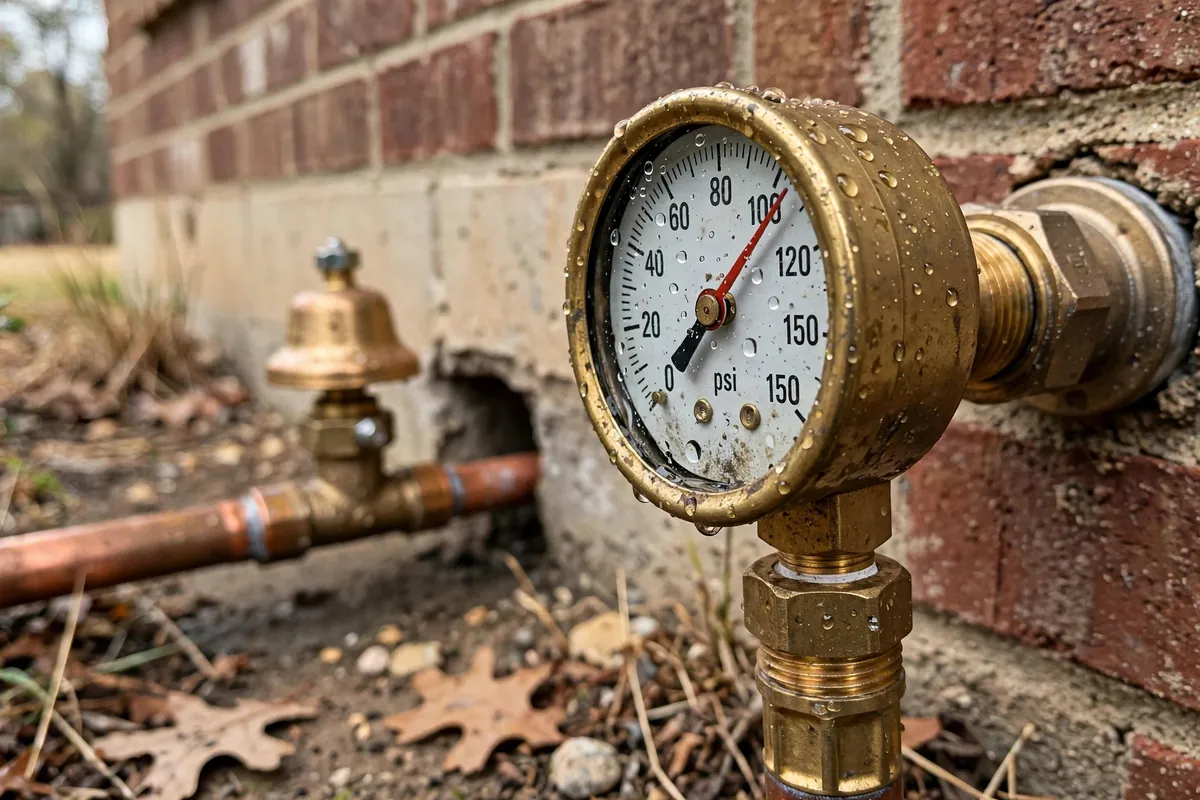
A pinhole leak is a tiny perforation in copper pipe, caused by corrosion working from the inside out. In Plano, the driver is water hardness — 15–20 grains per gallon of dissolved minerals scouring and pitting copper walls year after year.
The pipes under Plano homes
Plano’s dominant stock is 1970s–90s under-slab copper — the danger era: thermal expansion abrades copper against concrete every hot-water cycle, and decades of clay movement have flexed every joint. 1990s builds got better pipe bedding and hold up longer, but share the same hard water. Post-2000 pockets run PEX, which rarely leaks. Every era here faces the same internal enemy: 15–20 grains-per-gallon water pitting copper from the inside out.
- High municipal pressure accelerates it. Plano’s water pressure runs high in many areas. Pressure above 80 PSI hammers every weak point. A pressure-reducing valve (PRV) set to 60–65 PSI is the fix — and if your home lacks one, or the old one failed, your pipes take the full hit.
Pinhole leaks are small enough to run for months undetected, quietly saturating soil under the slab while the bill creeps up.
Warning Signs Plano Homeowners Should Never Ignore
- Water bill creeping up. Small leaks don’t spike the bill — they inflate it steadily. Compare year-over-year.
- Damp or warm floor spots. Hot-line pinholes heat the slab; cold-line pinholes leave persistent dampness.
- Water sounds, everything off. A faint hiss near bathrooms or the water heater means pressurized water is escaping.
- Mildew or musty smells. Slow water intrusion feeds mold risk long before anything looks wet.
- Cracks in tile or drywall. Eroded or swollen soil moves the slab — and the slab moves the house.
- The meter test. Everything off, meter still moving? Water is leaving the system somewhere it shouldn’t.
Don’t talk yourself out of it. Call (888) 555-0199 — we’ll connect you with a licensed Plano leak detection specialist for same-day service.
Slab leak or irrigation leak? How Plano homeowners tell
Nearly every Plano home has sprinklers, so a spiking bill gets blamed on irrigation by default. Isolate instead: shut the irrigation controller completely off, then watch the meter. Still running with irrigation OFF? The leak is in the house system or service line — it’s the slab, not the sprinklers. Warm floor spots and water sounds with everything off are never irrigation. Zone pressure testing settles it definitively.
How Specialists Find Pinhole Leaks Under a Slab
Pinhole leaks are small, but professional equipment listens for pressure: acoustic listening detects the high-frequency hiss of water jetting through a pinhole, thermal imaging spots the slab’s thermal signature, and zone pressure testing proves which run is losing pressure. A good specialist also checks incoming pressure and PRV condition — finding the leak without fixing the pressure that caused it just schedules the next one.
Full professional detection in Plano runs $300–$600, typically credited toward repair. If your home lacks a working PRV, having one installed (set to 60–65 PSI) is one of the highest-value plumbing investments a Plano homeowner can make.
What Repair Costs Look Like in Plano
A single-line reroute — abandoning the failed under-slab copper and running new pipe through walls or the attic — typically costs $3,000–$6,000. That’s the industry standard; cutting open the slab to patch a pinhole is not recommended because the rest of that aging copper is pitted too.
Here’s the Plano math: with original 1970s–90s copper and one pinhole leak behind you, the odds of a second within a couple of years are high. Many Plano homeowners skip the repeat-emergency cycle and go straight to a full repipe ($12,000–$25,000).
Stop Guessing — Get a Definitive Answer Today
A rising water bill, a warm spot on the tile, water sounds with nothing running — in Plano, those are pinhole leak symptoms until proven otherwise. Call (888) 555-0199 now for same day leak detection in Plano, with a pressure check included.
Also serving nearby: Leak Detection in Frisco, TX, Leak Detection in Allen, TX, Leak Detection in Richardson, TX, Leak Detection in Dallas, TX, and Leak Detection in McKinney, TX. Related services: Emergency Leak Repair, Water Leak Detection.
Frequently Asked Questions
Does hard water really cause slab leaks in Plano?
Yes — it’s a primary driver. Plano’s 15–20 grains-per-gallon water pits copper from the inside out over decades, while high pressure and expansive clay attack from outside.
What water pressure should my Plano home have?
Around 60–65 PSI, controlled by a pressure-reducing valve (PRV). Pressure above 80 PSI stresses every joint and weak point and accelerates pinhole failures. Don’t know your pressure? Have it checked — a failed or missing PRV is a common finding in Plano homes.
Are slab leaks common in Plano?
Yes. Plano’s dominant 1970s–90s under-slab copper is in the failure window, attacked from the inside by 15–20 grains-per-gallon hard water and from the outside by high municipal pressure and shifting expansive clay. Pinhole leaks are the signature failure — and one usually means more are forming.
My water bill spiked but nothing is visibly leaking — slab leak or irrigation?
Shut the irrigation controller completely off and watch the meter. Still running? It’s the house system or service line — not the sprinklers. Warm floor spots, water sounds with everything off, or water coming up through the floor confirm a slab leak. Zone pressure testing settles it definitively.
How much does leak detection cost in Plano?
Typically $300–$600 for the full diagnostic visit — acoustic listening, thermal imaging, and zone pressure testing — with most straightforward homes near the lower end. Most companies credit the fee toward repair, and a good visit includes checking your incoming pressure and PRV.
I fixed one pinhole leak — will there be more?
Very likely, with original 1970s–1990s copper. Pinhole corrosion affects the whole system, not one spot — the rest of the pipe is the same age, in the same water, under the same slab. Many Plano homeowners choose a full repipe ($12k–$25k) after the first pinhole rather than paying for repeat emergencies.
Can a pinhole leak cause mold?
Yes. Even a slow pinhole keeps soil and slab edges persistently damp, and that moisture wicks into wall bases and flooring — prime conditions for mold growth. More at epa.gov.
Water Where It Shouldn’t Be? Don’t Wait.
Every hour a leak runs, the damage — and the repair bill — keeps growing.
When the Water Company Tips You Off in Plano
Here is how most Plano leak calls actually start: the City of Plano’s water utility notices abnormal usage on your meter and sends a high-bill notice or leak alert — sometimes weeks before you see a damp spot or hear running water. Do not ignore it. A slab or supply-line leak can waste thousands of gallons a month, and in Plano’s expansive clay soil, that water does foundation damage while it runs. Shut everything off and check your meter: if the dial moves with zero water use, call (888) 555-0199 for same-day leak detection in Plano.